Honesty in Islam for Kids: A Powerful Story from Madinah Every Parent Should Read
June 11, 2026
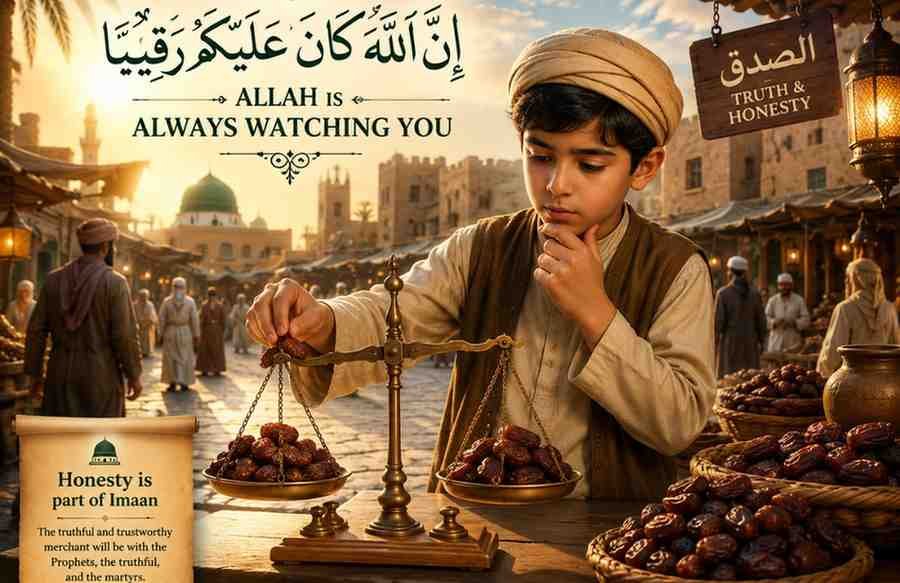
Honesty is one of the strongest character traits a child can learn early in life. In Islam, it is not just a “good habit”—it is a part of faith, taqwa, and true success in this world and the Hereafter. Many parents today struggle with questions like: How do I teach honesty to my child? What if my child lies sometimes? How can I connect Islamic values with daily life? The best way is not lectures—but 𝒔𝒕𝒐𝒓𝒊𝒆𝒔 𝒕𝒉𝒂𝒕 𝒕𝒐𝒖𝒄𝒉 𝒕𝒉𝒆 𝒉𝒆𝒂𝒓𝒕. Here is a powerful Islamic story that children easily understand and remember.
The Date Seller and the Meaning of Honesty (Islamic Story for Kids)
In the blessed city of Madinah, there lived a young boy named Abdullah. He helped his father in a small date shop near the market. His father was known for one thing in the whole area—complete honesty in trade. He always reminded his son: “My son, remember this: Allah is watching you even when no one else is.”
A Test of Honesty
One day, Abdullah’s father left for Salah, and the boy stayed to look after the shop. A customer came to buy dates. Abdullah started weighing the dates carefully. While doing so, he noticed something tempting. If he added a little extra weight, the customer would not notice—and he could keep a few extra coins for himself. He looked around. No one was watching. For a moment, his mind tried to justify it: “It’s just a small amount… it won’t matter…” But then he remembered something he had heard in his home and masjid. The words of Allah echoed in his heart: “𝑾𝒐𝒆 𝒕𝒐 𝒕𝒉𝒐𝒔𝒆 𝒘𝒉𝒐 𝒈𝒊𝒗𝒆 𝒍𝒆𝒔𝒔 𝒊𝒏 𝒎𝒆𝒂𝒔𝒖𝒓𝒆 𝒂𝒏𝒅 𝒘𝒆𝒊𝒈𝒉𝒕.” (𝑺𝒖𝒓𝒂𝒉 𝑨𝒍-𝑴𝒖𝒕𝒂𝒇𝒇𝒊𝒇𝒊𝒏 83:1) And also the teaching of the Prophet Muhammad ﷺ: “The truthful and trustworthy merchant will be with the Prophets, the truthful, and the martyrs.” (Tirmidhi)
The Moment of Decision
Abdullah stopped. His hands froze. Then quietly he said to himself: “Even if no one sees me… Allah sees me.” He corrected the weight and gave the exact amount—nothing extra, nothing less. The customer smiled and said: “You are a trustworthy boy. May Allah bless your family.”
A Father’s Proud Moment
When Abdullah’s father returned, the boy told him everything honestly. Instead of anger, his father smiled with pride and hugged him. He said: “Today you did not just sell dates… you proved your Imaan.” From that day, their shop became known in the entire area as: “𝑻𝒉𝒆 𝑺𝒉𝒐𝒑 𝒐𝒇 𝑻𝒓𝒖𝒔𝒕 𝒂𝒏𝒅 𝑯𝒐𝒏𝒆𝒔𝒕𝒚.” People came from far away—not just for dates, but because they trusted their honesty completely.
What This Story Teaches Children
This Islamic story is not just for reading—it builds character. 🌿 𝑲𝒆𝒚 𝑳𝒆𝒔𝒔𝒐𝒏𝒔: Allah is always watching, even when people are not Honesty is part of taqwa (God-consciousness) Small lies can damage big trust A truthful person is loved by Allah and people
Why Honesty Matters in Islam
Islam teaches honesty in every part of life—home, school, business, and friendships. The Prophet Muhammad ﷺ was known as Al-Amin (The Trustworthy) even before prophethood. This shows that honesty is the foundation of a strong Muslim character. For children, learning honesty early helps them: Build confidence Earn respect Develop strong Islamic values Avoid harmful habits like lying or cheating
For Parents: Simple Way to Teach Honesty
Instead of only saying “don’t lie,” try this: ✔ Tell Islamic stories regularly ✔ Appreciate honesty, even in small mistakes ✔ Correct gently, not harshly ✔ Show honesty in your own actions Children learn more from what they see than what they hear.
Conclusion
Honesty is not just a word—it is a way of life. A child who learns honesty early becomes a person of 𝒕𝒓𝒖𝒔𝒕, 𝒓𝒆𝒔𝒑𝒆𝒄𝒕, 𝒂𝒏𝒅 𝒔𝒕𝒓𝒐𝒏𝒈 𝑰𝒎𝒂𝒂𝒏. And in Islam, that is a success greater than any wealth.